Evaluating the Set of 2 Carnations for High-Resolution Digital and Print Projects
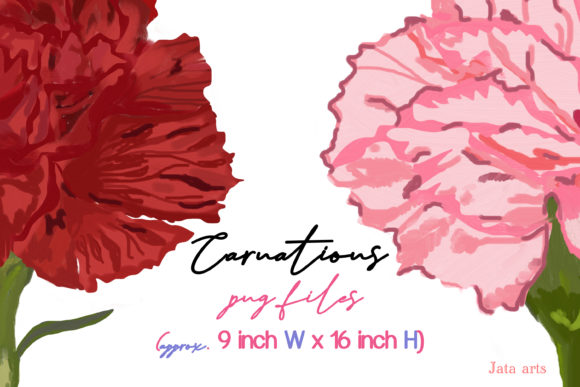
When sourcing botanical assets for professional design work, the technical specifications are often just as critical as the aesthetic appeal. The Set of 2 Carnations, specifically configured as high-resolution PNG files with transparent backgrounds, represents a targeted solution for designers who require print-ready floral elements without the overhead of full stock photography subscriptions or complex vector tracing. This asset package typically includes two distinct carnation illustrations in red and pink hues, alongside an extra floral decor element, all rendered at 300 DPI. Understanding the specific utility of this format helps determine whether it aligns with your current project requirements or if alternative resources would be more appropriate.
Technical Specifications and Print Viability
The primary differentiator for this specific set is the resolution standard. In digital asset marketplaces, many floral clipart packs are optimized for web use at 72 DPI or 96 DPI. While sufficient for screen-based mockups, these lower resolutions result in pixelation when scaled for physical media. The Set of 2 Carnations is engineered at 300 DPI, which is the industry benchmark for offset printing, packaging design, and high-quality stationery. This density ensures that the petal textures and color gradients remain crisp even when the image is printed at a significant size.
The inclusion of three separate PNG files—two carnations and one supplementary decor element—offers modularity that flat JPEG images cannot provide. Because these files feature true transparency rather than a white background box, they can be layered directly onto colored cardstock designs, textured paper overlays, or complex digital compositions without requiring manual masking. For professionals working under tight deadlines, this pre-masked state eliminates the tedious process of using pen tools or magic wand selectors to isolate flower petals, preserving edge quality that automated selection tools often degrade.
Comparing Raster Art to Vector Alternatives
A common decision point for designers is choosing between high-resolution raster art, like this Set of 2 Carnations, and scalable vector graphics (SVG/EPS). Vectors are mathematically defined and infinitely scalable, making them ideal for large-format signage or branding systems where size varies dramatically. However, vectors have limitations regarding painterly texture and organic realism. A vector carnation often appears stylized or graphic due to the nature of anchor points and gradients.
In contrast, the raster format of this set captures the nuanced lighting, soft edges, and natural imperfections of real botanical specimens. If your project demands photorealism or a traditional hand-painted aesthetic, the Set of 2 Carnations provides a level of organic detail that vectors struggle to replicate without massive file sizes. Conversely, if you need to resize the flower from a business card icon to a billboard without any loss of fidelity, or if you need to recolor the flower to match a specific Pantone swatch instantly, a vector alternative would be the superior choice. This raster set is best suited for projects where the final output size is known or falls within a predictable range, such as wedding invitations, product labels, greeting cards, and editorial layouts.
Aesthetic Versatility and Color Utility
The specific color pairing of red and pink addresses a broad spectrum of design themes. Red carnations traditionally symbolize deep love and admiration, making them a staple for Valentine’s Day, anniversaries, and romantic event branding. Pink carnations often convey gratitude and gentleness, fitting well with Mother’s Day, spring promotions, and wellness-related content. By providing both colors in a single set, the resource covers multiple emotional tones without requiring additional purchases.
Furthermore, the inclusion of an extra floral decor element adds necessary negative space management to compositions. Standalone flowers can sometimes look floating or disconnected in a layout. The supplementary element acts as a visual anchor or transition piece, helping to integrate the main carnations into borders, corners, or text wraps. When comparing this set to single-flower downloads, the bundled decor element increases the functional value by reducing the need to hunt for matching filler graphics that share the same artistic style and lighting direction.
Workflow Integration and File Management
For designers evaluating efficiency, the PNG format offers a middle ground between raw flexibility and ease of use. Unlike PSD or AI files, which require specific software and layer management, these PNGs are universally compatible. They can be imported into Adobe InDesign, Illustrator, Photoshop, Canva, Procreate, and even Microsoft Office applications while maintaining transparency. This cross-platform compatibility makes the Set of 2 Carnations particularly valuable for mixed-team environments where stakeholders may use different tools.
However, users should be aware of the tradeoffs regarding editability. Because these are flattened raster images, you cannot adjust individual petals, change the lighting source, or alter the bloom stage as you could with a layered PSD or a vector file. Color adjustments must be applied globally via hue/saturation filters or blending modes. If your workflow requires frequent structural modifications to the flower itself, this set may feel limiting. It is optimized for placement and composition rather than reconstruction. Professionals should assess whether their creative process involves arranging existing elements or fundamentally altering the botany of the illustration.
Decision Factors: When to Choose This Resource
Selecting the right asset involves balancing budget, timeline, and quality expectations. The Set of 2 Carnations is likely the optimal choice in several specific scenarios:
- Print-First Projects: When the deliverable is physical (invitations, packaging, posters) and 300 DPI is a non-negotiable requirement.
- Rapid Prototyping: When you need high-quality placeholders that will also serve as final assets, eliminating the need to replace low-res comps later.
- Thematic Consistency: When you need red and pink florals that share an identical artistic hand, ensuring visual cohesion across a campaign.
- Non-Destructive Workflows: When you want to avoid managing complex layer stacks or font dependencies associated with editable source files.
Conversely, readers should consider exploring alternatives if:
- Large Format Scaling is Required: For vehicle wraps or building signage, seek vector art or ultra-high-resolution photography (600+ DPI).
- Custom Color Matching is Critical: If the red must match a specific corporate brand guide exactly, a customizable vector or layered file allows for precise CMYK/Pantone control.
- Botanical Accuracy is Mandatory: For scientific or educational publications, verify that the artistic interpretation matches the biological reality of Dianthus caryophyllus, as digital art may prioritize aesthetics over anatomical correctness.
Evaluating Quality Beyond Resolution
While 300 DPI is a baseline metric, the perceived quality of the Set of 2 Carnations also depends on edge integrity and color depth. When previewing or testing these files, zoom in to 100% to inspect the transition between the petal edges and the transparent background. High-quality assets exhibit smooth anti-aliasing without jagged pixels or white halos, which indicate poor masking. Additionally, check the color profile. Files intended for professional printing should ideally be in CMYK or a wide-gamut RGB that converts cleanly to CMYK without significant color shifting, particularly in the vibrant reds which are prone to dullness during conversion.
Ultimately, this digital art set serves as a specialized tool within a broader design arsenal. It bridges the gap between generic web clipart and expensive custom illustration. By understanding its strengths in print readiness, modular composition, and stylistic consistency, as well as its limitations regarding scalability and structural editing, professionals can make informed procurement decisions that streamline production while maintaining high visual standards. Whether used as a focal point in a wedding suite or an accent in seasonal packaging, the utility of these assets lies in their balance of artistic quality and technical pragmatism.